Buy berufskrankheit.eu ?
We are moving the project
berufskrankheit.eu .
Are you interested in purchasing the domain
berufskrankheit.eu ?
domain@kv-gmbh.de · 0541-91531010
Buy berufskrankheit.eu ?
What am I doing wrong when subtracting?
When subtracting, it's important to ensure that you are aligning the numbers properly, with the larger number on top and the smaller number on the bottom. Also, make sure to borrow or regroup when necessary, especially when subtracting across different place values. Double-check your work to ensure that you are subtracting the correct digits and carrying over any necessary values. If you are still having trouble, consider practicing with simpler problems and seeking additional help or resources to improve your subtraction skills. **
Where is the error in subtracting binary numbers?
The error in subtracting binary numbers typically occurs when borrowing is not properly carried out. When subtracting, if the digit being subtracted is larger than the digit it is being subtracted from, a borrow is needed from the next higher-order bit. If this borrow is not properly accounted for, it can lead to incorrect results. Additionally, errors can also occur if the numbers being subtracted are not properly aligned, leading to incorrect borrow operations. Therefore, careful attention to borrowing and alignment is crucial to avoid errors when subtracting binary numbers. **

Similar search terms for Subtracting
Top-Angebote
Products related to Subtracting:
-
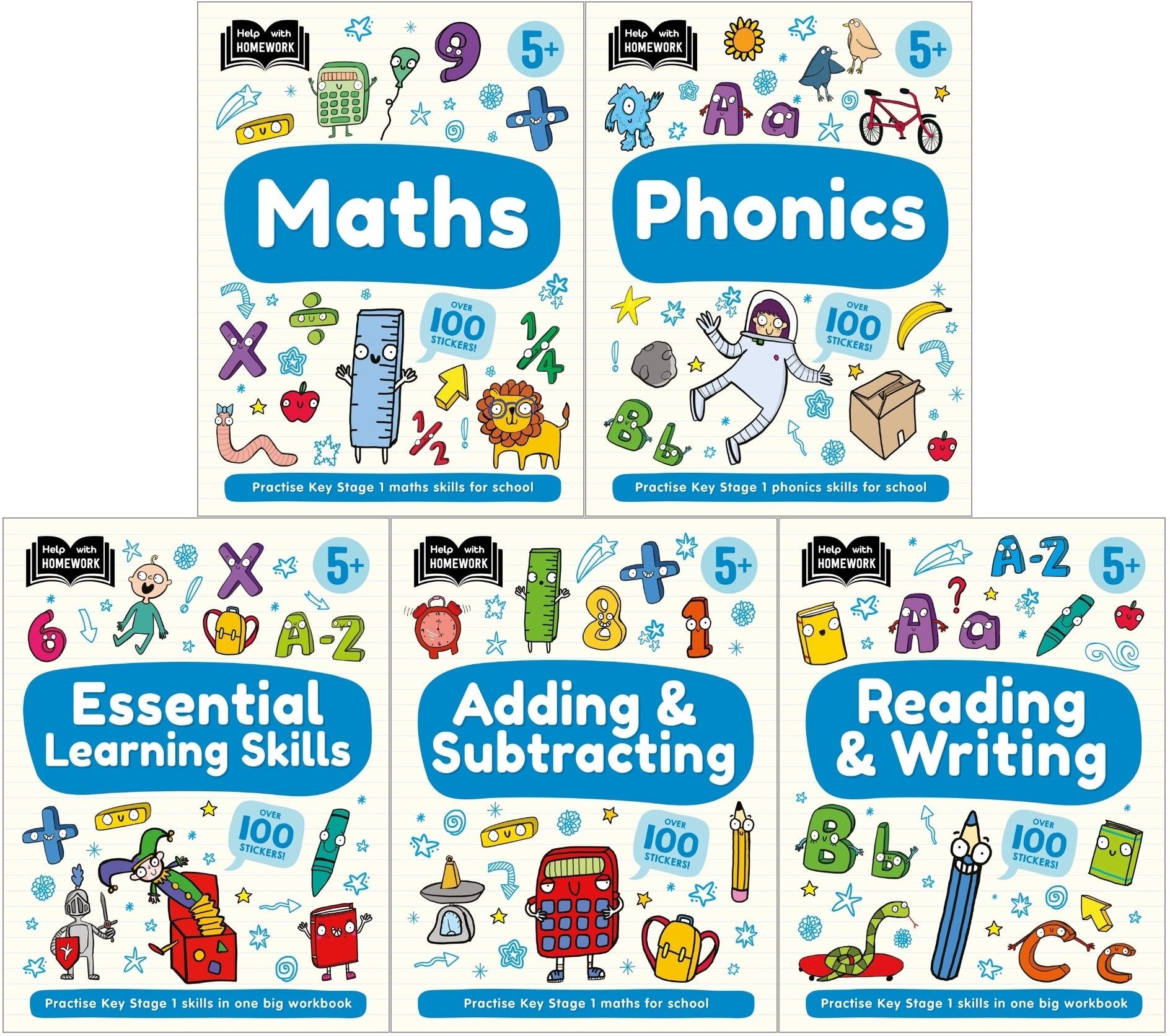
Autumn Publishing Help With Homework 5 Books Collection Set Age 5+ (Essential Learning Skills, Maths, Phonics, Reading & Writing, Adding & Subtracting)Help With Homework 5 Books Collection Set Age 5+ (Essential Learning Skills, Maths, Phonics, Reading & Writing, Adding & Subtracting) Packed with fun, expert-reviewed activities designed for Key Stage 1, these workbooks are the perfect link between school and home learning. Including over 100 stickers, games, puzzles and activities, children are sure to have fun while learning essential skills for school! Essential Learning Skills - Learn essential learning skills for school - Prepare preschoolers for Key Stage 1 SATs - Age-appropriate content for ages 5 and up - Reward stickers to motivate learners - Activities to make learning fun! - Perfect for supporting home learning Maths - Learn essential maths skills - Prepare preschoolers for Key Stage 1 SATs - Age-appropriate content for ages 5 and up - Reward stickers to motivate learners - Activities to make learning fun! - Perfect for supporting home learning Phonics - Learn essential phonics skills - Prepare preschoolers for Key Stage 1 SATs - Age-appropriate content for ages 5 and up - Reward stickers to motivate learners - Activities to make learning fun! - Perfect for supporting home learning Reading & Writing - Learn essential reading and writing skills - Prepare preschoolers for Key Stage 1 SATs - Age-appropriate content for ages 5 and up - Reward stickers to motivate learners - Activities to make learning fun! - Perfect for supporting home learning Adding & Subtracting - Learn essential maths skills - Prepare preschoolers for Key Stage 1 SATs - Age-appropriate content for ages 5 and up - Reward stickers to motivate learners - Activities to make learning fun! - Perfect for supporting home learning9,99 £*Shipping: 2,99 £Secure redirect to the provider
-
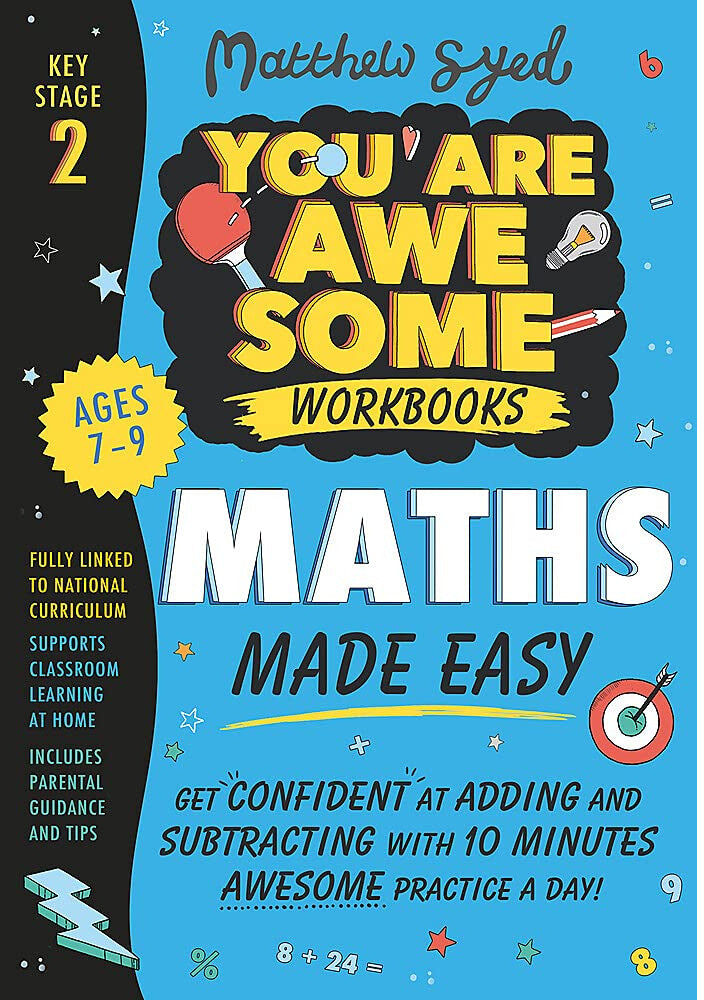
Wren & Rook Maths Made Easy: Get confident at adding and subtracting with 10 minutes' awesome practice a day! (You Are Awesome)Help children to find their confidence in Maths with these AWESOME curriculum-linked workbooks that will encourage practise, build self esteem and a positive growth mindset. From the author of the children's number 1 bestseller You Are Awesome - and supported by education specialists - this workbook reinforces Matthew's positive message about finding the confidence to try, not being afraid of failure and the awesome power of practice. The curriculum-relevant exercises encourage children to employ a growth mindset when it comes to subjects they find difficult, and will help them succeed in Maths! Suitable for ages 7 to 9.3,49 £*Shipping: 1,99 £Secure redirect to the provider
-
Faber This Book Will Change Your Mind About Mental Health – Nathan Filer Understanding Mental Illness, Stigma & Modern WellbeingInsightful, compassionate, and refreshingly honest, This Book Will Change Your Mind About Mental Health by Nathan Filer challenges the myths, fears, and misunderstandings that surround mental illness. Blending real-life stories, scientific research, and lived experience, Nathan Filer offers a clear and humane exploration of mental health conditions such as depression, anxiety, schizophrenia, and bipolar disorder. The book explains how mental illness is treated today, why stigma still exists, and how our attitudes can shape recovery and wellbeing. Written in an accessible, engaging style, this book is ideal for general readers, students, carers, and anyone wanting a better understanding of mental health. It encourages empathy, openness, and informed conversation—making complex topics easy to understand without oversimplifying them. Why Readers Recommend This Book: Written by bestselling author Nathan Filer Challenges common myths about mental illness Combines science, storytelling, and lived experience Promotes empathy, understanding, and awareness Ideal for readers new to mental health topics A powerful and enlightening read, This Book Will Change Your Mind About Mental Health is essential for anyone seeking a clearer, kinder understanding of mental wellbeing in today’s world.3,49 £*Shipping: 1,99 £Secure redirect to the provider


-
How do you calculate with the subtracting amplifier R4?
To calculate with the subtracting amplifier R4, you first need to determine the input voltages (V1 and V2) and the resistor values (R1, R2, R3, and R4). The output voltage (Vout) can be calculated using the formula Vout = -R4 * ((V2/R2) - (V1/R1)). By plugging in the values of V1, V2, R1, R2, and R4 into the formula, you can calculate the output voltage of the subtracting amplifier R4. **
-
What is the formula for subtracting value added tax?
The formula for subtracting value added tax (VAT) from a total amount is: Total amount - (Total amount / (1 + VAT rate)) For example, if the total amount is $100 and the VAT rate is 10%, the formula would be: $100 - ($100 / 1.10) = $100 - $90.91 = $9.09 (VAT amount) **
-
What distinguishes the Workplace Ordinance from the Occupational Safety and Health Act?
The Workplace Ordinance primarily focuses on regulating the working conditions and environment within a workplace, including issues such as working hours, breaks, and holidays. On the other hand, the Occupational Safety and Health Act is more specific to ensuring the safety and health of workers while on the job, including regulations related to workplace hazards, training, and safety protocols. While both aim to protect workers, the Workplace Ordinance has a broader scope that encompasses various aspects of working conditions beyond just safety and health. **
-
What is the algebraic representation of subtracting two-digit numbers?
The algebraic representation of subtracting two-digit numbers involves writing the larger number first, followed by a minus sign, and then the smaller number. For example, if we want to subtract 35 from 72, the algebraic representation would be 72 - 35. This representation helps us perform the subtraction operation by subtracting the ones place first, then the tens place if necessary, and carrying over if needed. **


What are examples of adding forces, subtracting forces, and balancing forces?
Examples of adding forces include pushing a box with two people applying force in the same direction, or two cars pulling a heavy object with their combined force. Subtracting forces can be seen when one person pushes a box to the right with a certain force, while another person pushes the same box to the left with a smaller force, resulting in a net force to the right. Balancing forces occur when two people pull on a rope with equal force in opposite directions, resulting in no movement of the rope. **
How do I define a variable for subtracting two numbers in Java?
To define a variable for subtracting two numbers in Java, you can declare two integer variables and then assign values to them. For example: ```java int num1 = 10; int num2 = 5; int result = num1 - num2; ``` In this example, we declare two integer variables `num1` and `num2` and then subtract `num2` from `num1` and store the result in another variable `result`. **
Top-Angebote
Products related to Subtracting:
-
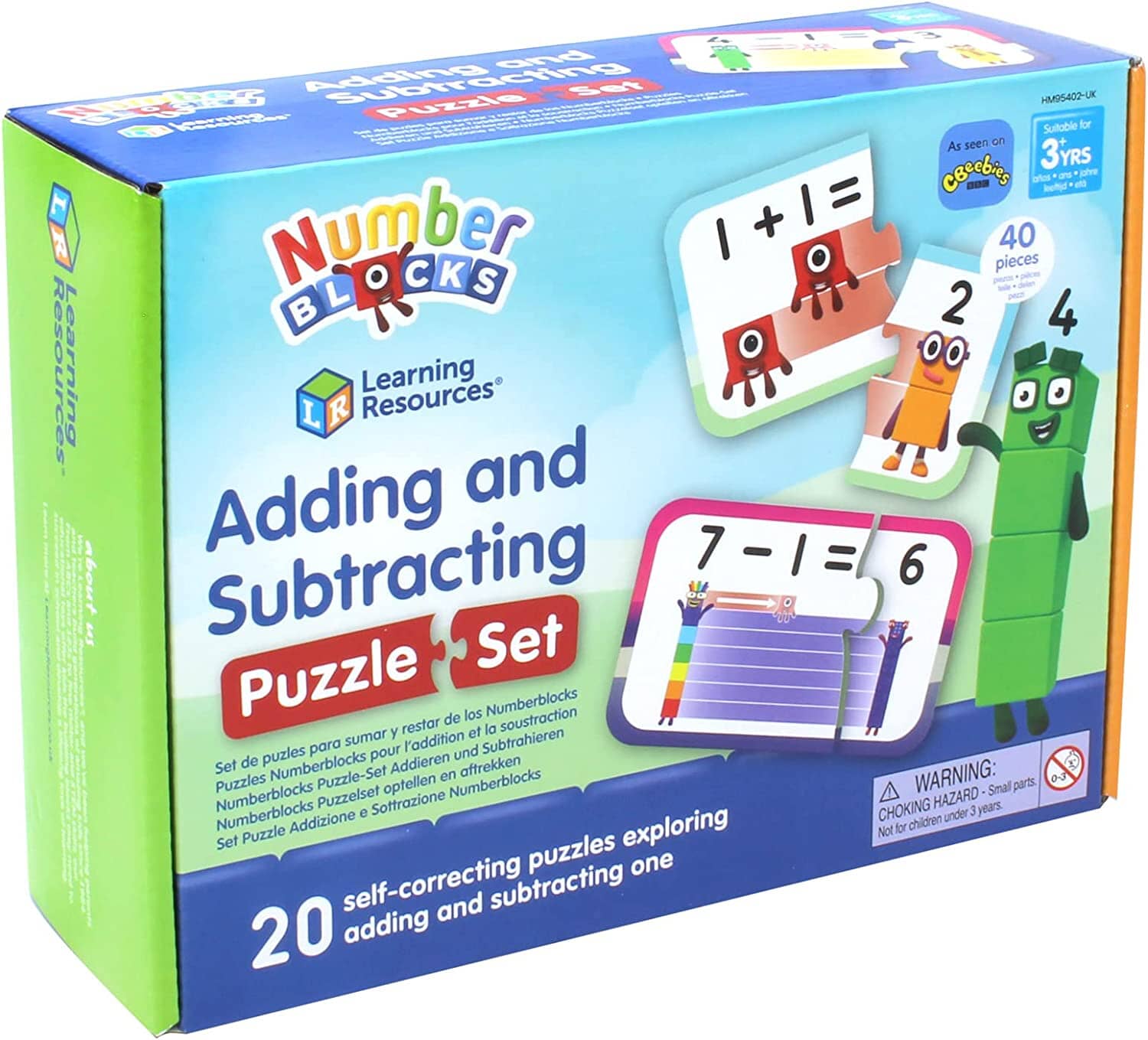
Numberblocks Adding and Subtracting Puzzle Set by Learning Resources - Ages 3 Years+ Learning ResourcesNUMBERBLOCKS AS SEEN ON TV: Discover what happens when you add or subtract 1 with these simple 2-piece Numberblocks jigsaw puzzles based on the award-winning TV series. ADD & SUBTRACT: Make learning simple addition and subtraction fun for young children! As children complete the 20 colourful puzzles, they’ll be building basic maths skills along with colour recognition and fine motor skills. MATCH NUMBERS & PICTURES: See the addition or subtraction question, count the Numberblocks on the puzzle piece, and then find the correct answer piece. SELF-CORRECTING PUZZLES: Each of these clever self-correcting Numberblocks counting puzzles fits together in a unique way, so there’s only one right answer. INCLUDES: 20 x 2-piece puzzles. The chunky pieces are made from durable card and are easy for little hands to hold. Pieces store in the reusable packaging after play. Completed puzzles measure 15cm L x 10cm W.15,99 £*Shipping: 2,99 £Secure redirect to the provider
-
Learning Resources Numberblocks Adding and Subtracting Puzzle Set for Ages 3 and Up - 20 Puzzles - Early Maths PracticeIntroduce early maths practice to your child with the Learning Resources Numberblocks Adding and Subtracting Puzzle Set. Designed for children aged 3 and over, this hands-on activity introduces simple addition and subtraction with familiar Numberblocks characters from Zero to Ten. The set includes 20 two-piece puzzles: 10 addition puzzles and 10 subtraction puzzles. Each puzzle has a unique self-correcting fit, so children can match the question with the correct answer and learn through independent play. The puzzles are made from durable card for repeated use. Completed puzzles measure 15 cm long x 10 cm wide. The puzzle pieces store neatly in the reusable box, making it easy to keep them organized and ready for the next play session.9,95 £*Shipping: 3,95 £Secure redirect to the provider
-
Autumn Publishing Help With Homework 5 Books Collection Set Age 5+ (Essential Learning Skills, Maths, Phonics, Reading & Writing, Adding & Subtracting)Help With Homework 5 Books Collection Set Age 5+ (Essential Learning Skills, Maths, Phonics, Reading & Writing, Adding & Subtracting) Packed with fun, expert-reviewed activities designed for Key Stage 1, these workbooks are the perfect link between school and home learning. Including over 100 stickers, games, puzzles and activities, children are sure to have fun while learning essential skills for school! Essential Learning Skills - Learn essential learning skills for school - Prepare preschoolers for Key Stage 1 SATs - Age-appropriate content for ages 5 and up - Reward stickers to motivate learners - Activities to make learning fun! - Perfect for supporting home learning Maths - Learn essential maths skills - Prepare preschoolers for Key Stage 1 SATs - Age-appropriate content for ages 5 and up - Reward stickers to motivate learners - Activities to make learning fun! - Perfect for supporting home learning Phonics - Learn essential phonics skills - Prepare preschoolers for Key Stage 1 SATs - Age-appropriate content for ages 5 and up - Reward stickers to motivate learners - Activities to make learning fun! - Perfect for supporting home learning Reading & Writing - Learn essential reading and writing skills - Prepare preschoolers for Key Stage 1 SATs - Age-appropriate content for ages 5 and up - Reward stickers to motivate learners - Activities to make learning fun! - Perfect for supporting home learning Adding & Subtracting - Learn essential maths skills - Prepare preschoolers for Key Stage 1 SATs - Age-appropriate content for ages 5 and up - Reward stickers to motivate learners - Activities to make learning fun! - Perfect for supporting home learning9,99 £*Shipping: 2,99 £Secure redirect to the provider
-
Wren & Rook Maths Made Easy: Get confident at adding and subtracting with 10 minutes' awesome practice a day! (You Are Awesome)Help children to find their confidence in Maths with these AWESOME curriculum-linked workbooks that will encourage practise, build self esteem and a positive growth mindset. From the author of the children's number 1 bestseller You Are Awesome - and supported by education specialists - this workbook reinforces Matthew's positive message about finding the confidence to try, not being afraid of failure and the awesome power of practice. The curriculum-relevant exercises encourage children to employ a growth mindset when it comes to subjects they find difficult, and will help them succeed in Maths! Suitable for ages 7 to 9.3,49 £*Shipping: 1,99 £Secure redirect to the provider
-
What am I doing wrong when subtracting?
When subtracting, it's important to ensure that you are aligning the numbers properly, with the larger number on top and the smaller number on the bottom. Also, make sure to borrow or regroup when necessary, especially when subtracting across different place values. Double-check your work to ensure that you are subtracting the correct digits and carrying over any necessary values. If you are still having trouble, consider practicing with simpler problems and seeking additional help or resources to improve your subtraction skills. **
-
Where is the error in subtracting binary numbers?
The error in subtracting binary numbers typically occurs when borrowing is not properly carried out. When subtracting, if the digit being subtracted is larger than the digit it is being subtracted from, a borrow is needed from the next higher-order bit. If this borrow is not properly accounted for, it can lead to incorrect results. Additionally, errors can also occur if the numbers being subtracted are not properly aligned, leading to incorrect borrow operations. Therefore, careful attention to borrowing and alignment is crucial to avoid errors when subtracting binary numbers. **
-
How do you calculate with the subtracting amplifier R4?
To calculate with the subtracting amplifier R4, you first need to determine the input voltages (V1 and V2) and the resistor values (R1, R2, R3, and R4). The output voltage (Vout) can be calculated using the formula Vout = -R4 * ((V2/R2) - (V1/R1)). By plugging in the values of V1, V2, R1, R2, and R4 into the formula, you can calculate the output voltage of the subtracting amplifier R4. **
-
What is the formula for subtracting value added tax?
The formula for subtracting value added tax (VAT) from a total amount is: Total amount - (Total amount / (1 + VAT rate)) For example, if the total amount is $100 and the VAT rate is 10%, the formula would be: $100 - ($100 / 1.10) = $100 - $90.91 = $9.09 (VAT amount) **
Similar search terms for Subtracting
-
Faber This Book Will Change Your Mind About Mental Health – Nathan Filer Understanding Mental Illness, Stigma & Modern WellbeingInsightful, compassionate, and refreshingly honest, This Book Will Change Your Mind About Mental Health by Nathan Filer challenges the myths, fears, and misunderstandings that surround mental illness. Blending real-life stories, scientific research, and lived experience, Nathan Filer offers a clear and humane exploration of mental health conditions such as depression, anxiety, schizophrenia, and bipolar disorder. The book explains how mental illness is treated today, why stigma still exists, and how our attitudes can shape recovery and wellbeing. Written in an accessible, engaging style, this book is ideal for general readers, students, carers, and anyone wanting a better understanding of mental health. It encourages empathy, openness, and informed conversation—making complex topics easy to understand without oversimplifying them. Why Readers Recommend This Book: Written by bestselling author Nathan Filer Challenges common myths about mental illness Combines science, storytelling, and lived experience Promotes empathy, understanding, and awareness Ideal for readers new to mental health topics A powerful and enlightening read, This Book Will Change Your Mind About Mental Health is essential for anyone seeking a clearer, kinder understanding of mental wellbeing in today’s world.3,49 £*Shipping: 1,99 £Secure redirect to the provider
-
Iota Publishing Limited The Alkaline Detox Reset Cleanse: Eat to Beat Illness & Prevent Disease by Iota - Non Fiction Paperback - Alkaline Diet Recipes & Health GuideThe Alkaline Detox Reset Cleanse is a practical guide to eating the alkaline way, designed to help readers rebalance their body chemistry, support digestion, and boost overall wellbeing. This book provides clear nutritional guidance and is packed with recipes and snack ideas to make healthy eating easy to follow at home. The alkaline diet is presented as a straightforward, food-first approach to looking after both body and mind. By favouring alkaline-forming foods and reducing acid-forming ones, readers can help keep disease at bay, support steady energy levels, and give the digestive and immune systems the best chance to function properly. This book is a great resource for anyone looking to make a gentle reset or a longer-term shift towards healthier eating habits.2,99 £*Shipping: 2,99 £Secure redirect to the provider
-
What distinguishes the Workplace Ordinance from the Occupational Safety and Health Act?
The Workplace Ordinance primarily focuses on regulating the working conditions and environment within a workplace, including issues such as working hours, breaks, and holidays. On the other hand, the Occupational Safety and Health Act is more specific to ensuring the safety and health of workers while on the job, including regulations related to workplace hazards, training, and safety protocols. While both aim to protect workers, the Workplace Ordinance has a broader scope that encompasses various aspects of working conditions beyond just safety and health. **
-
What is the algebraic representation of subtracting two-digit numbers?
The algebraic representation of subtracting two-digit numbers involves writing the larger number first, followed by a minus sign, and then the smaller number. For example, if we want to subtract 35 from 72, the algebraic representation would be 72 - 35. This representation helps us perform the subtraction operation by subtracting the ones place first, then the tens place if necessary, and carrying over if needed. **
-
What are examples of adding forces, subtracting forces, and balancing forces?
Examples of adding forces include pushing a box with two people applying force in the same direction, or two cars pulling a heavy object with their combined force. Subtracting forces can be seen when one person pushes a box to the right with a certain force, while another person pushes the same box to the left with a smaller force, resulting in a net force to the right. Balancing forces occur when two people pull on a rope with equal force in opposite directions, resulting in no movement of the rope. **
-
How do I define a variable for subtracting two numbers in Java?
To define a variable for subtracting two numbers in Java, you can declare two integer variables and then assign values to them. For example: ```java int num1 = 10; int num2 = 5; int result = num1 - num2; ``` In this example, we declare two integer variables `num1` and `num2` and then subtract `num2` from `num1` and store the result in another variable `result`. **
* All prices are inclusive of VAT and, if applicable, plus shipping costs. The offer information is based on the details provided by the respective shop and is updated through automated processes. Real-time updates do not occur, so deviations can occur in individual cases. ** Note: Parts of this content were created by AI.